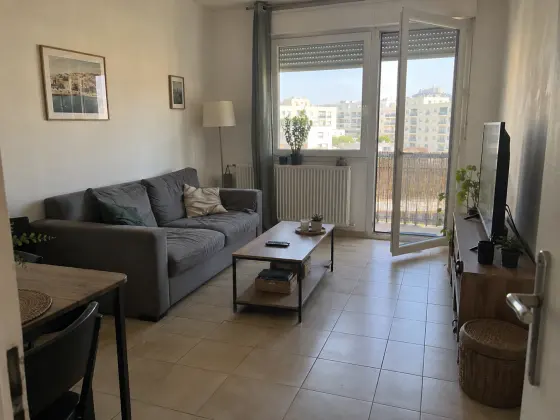






NewMarseille 8th
2-bedroom flat
395 000 €94/100
Looking for a home is about more than browsing listings. You need to compare them with your plans, shortlist properties, arrange viewings and keep track all the way to the offer. neoArgos pairs this search with a tracking notebook. AI agents assess listings against the buyer’s profile and explain their assessment.
neoArgos · Home-buying assistant
01
A listing can look attractive without matching the search. A property’s price, location or layout only make sense in light of the buyer’s criteria.
neoArgos builds its assessment around this match. Properties are compared with a defined project. The same home can therefore be more or less interesting depending on the search: the assessment is about this fit, not about any absolute quality of the property.
02
neoArgos’s AI agents score listings out of 100 against the buyer’s profile. They also write a review explaining the assessment. The score gives a point of comparison; the text sets out what to look at.
The two should be read together. A score is not a building survey, a notarial valuation or a guarantee about the purchase. Its value lies in helping you examine how well a property matches a project. The viewing and the checks are a different matter.
03
Once a property is shortlisted, the question changes: should you study it, visit it, arrange a viewing or follow up an offer already made? neoArgos gathers these stages in a notebook.
This tracking gives each property its place as the search goes on. The initial assessment and progress are kept apart: a highly rated listing doesn’t mean a viewing is booked, and a viewing isn’t a decision to buy. The journey keeps these distinctions all the way to the offer.
04
Images play a major role in a property search. The interface must give them room without pushing the comparison criteria into the background.
The neoArgos mock-ups pair each photo with a title, a location, a price and a score. The AI’s review stands apart from the rest of the listing; the notebook stages have their own area. This layout lets you move from overview to detail while knowing what concerns the property, its assessment and its follow-up.
05
In an AI-assisted interface, information taken from a listing and an opinion produced by an agent don’t have the same status. The way they are presented should make that difference visible, rather than giving the whole listing an air of certainty.
The neoArgos case makes this concrete: making an assessment useful also means making its limits clear. For a comparable project, you need to specify what data is sent to the model, how long it is kept and how it is processed. A good on-screen explanation is no substitute for these checks.
06
neoArgos lets you compare listings with a project, read an explained assessment and follow shortlisted properties through to the offer. AI handles a well-defined task; the notebook keeps track of each step.
The expertise shown here lies in this link between assessment and product journey. The assistant’s output fits into work the buyer carries on: studying the property, arranging the viewing and deciding what comes next. The score is a starting point for examining a listing, not the conclusion of the search.
Want to bring AI into a product? Let’s start from the task to be done, the information available and what the user needs to be able to check. Digikap helps you define AI’s place and give it shape in the application.
Let’s talk about how you use AISee our approach to AI assistants